Day in the Life of a New Class A Truck Driver
A Look at the First Day on the Road After CDL Training
A new Class A driver’s first day on the road looks different from the highway shots in recruiting ads, and that’s worth knowing going in. Understanding the everyday rhythm of the job, from the morning pre-trip check to finding parking for the night, helps a new graduate start the career with confidence. This walkthrough follows a typical day in the life of an OTR (over-the-road) truck driver, from the first pre-trip inspection to a truck stop parking lot somewhere new.
Key Takeaways
- Hours of Service (HOS) rules put a 14-hour on-duty clock in play the moment a driver begins any on-duty task, including the pre-trip inspection. That clock never pauses, which makes time management one of the first skills new drivers build on the job.
- A thorough pre-trip inspection takes 30 minutes to an hour and gets logged as on-duty time, not driving time, before the truck ever moves.
- Fatigue contributes to 31% of fatal large-truck crashes (per the National Transportation Safety Board), making rest breaks a safety requirement, not a preference.
- Detention time, the unpaid hours a driver waits at a shipper past the load or unload window, costs truckers $11,000 to $19,000 in lost annual revenue.
Every one of those takeaways comes back to one set of federal rules, laid out in full below.
Hours of Service Rules at a Glance
Hours of Service, or HOS, are the federal rules that limit how long a driver can be on duty and behind the wheel before taking a break. These rules shape everything about a driver’s day, and they show up repeatedly in the walkthrough below.
| Rule | Limit | Key Detail |
| Driving limit | 11 hours | After 10 consecutive hours off duty |
| On-duty window | 14 hours | Clock doesn’t pause for any reason |
| Mandatory break | 30 minutes | After 8 cumulative hours of driving |
| Weekly cap | 60/70 hours | In 7 or 8 consecutive days |
| Weekly reset | 34 hours off | Resets the 60/70-hour clock to zero |
New drivers pick these up fast, since the ELD is tracking every one of them in real time. The walkthrough below shows exactly when each one comes into play.
What a Typical OTR Day Looks Like for a New Class A Truck Driver
6:00 to 7:30 a.m.: Waking Up in the Sleeper Berth and Running a Pre-Trip Inspection
The alarm goes off inside the sleeper berth, which is not much bigger than a walk-in closet. The compact space holds a twin-sized bed, built-in storage, a small refrigerator, and power outlets, everything needed for a night on the road.
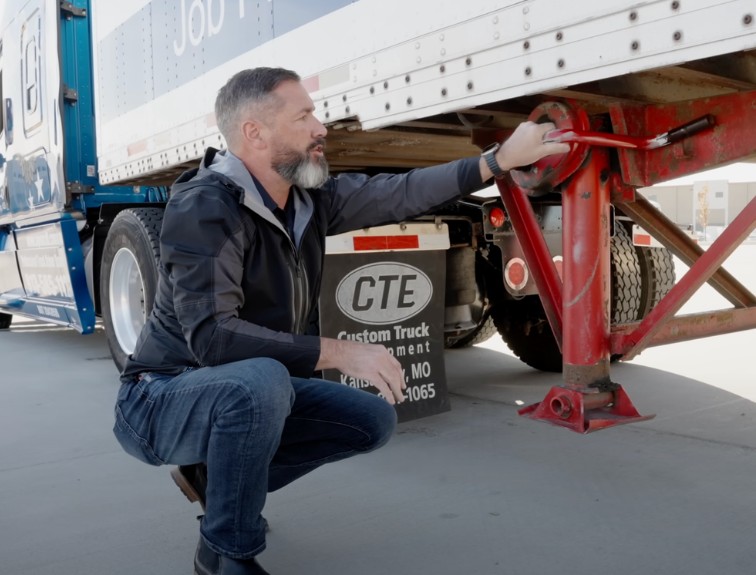
Before the driver can hit the road, a thorough pre-trip inspection comes first, checking the tractor and trailer from front to back. It takes 30 minutes to an hour and starts the 14-hour on-duty clock. From that point on, the clock keeps running no matter what the driver is doing next.
The checklist covers engine components, brakes, tires, lights, the fifth wheel, suspension, and trailer condition. Skipping a step is one of the fastest ways to pick up a violation at a roadside inspection. Apex Technical Institute walks through every checkpoint in its detailed CDL pre-trip inspection guide.
7:30 to 8:00 a.m.: Route Planning, Weather Checks, and ELD Setup
Before rolling out, the driver reviews the route for low bridges, weight restrictions, and construction zones, since a mistake here can mean getting stuck or turned around miles into the trip. Weather along the way matters just as much, since a storm or icy road can eat into the miles a driver planned to cover that day.
The driver also confirms the ELD (electronic logging device) is synced and reporting correctly before pulling out. Once the truck starts moving, the ELD automatically switches to driving status based on vehicle speed and engine data, and it tracks every mile from there until the truck stops again.

8:00 a.m. to 12:00 p.m.: First Driving Block and Front-Loading Miles
Experienced drivers front-load miles early in the day when they’re sharpest. New graduates build up to that pace over their first few weeks on the road, with stamina and confidence growing together.
The 11-hour driving limit allows a maximum of 11 hours behind the wheel after 10 consecutive hours off duty. Most drivers use this first driving block to cover as much ground as possible before traffic, weather, or shipper delays eat into the clock.
12:00 to 12:30 p.m.: Mandatory 30-Minute Break
Federal rules require at least 30 consecutive minutes off after eight hours of cumulative driving time. That time can be off duty, in the sleeper berth, or on duty but not driving, such as sitting at a loading dock. Many drivers build a break into the middle of the day like this one, well before the 8-hour mark arrives. That way, they’re not scrambling to find a legal place to stop later when the clock forces the issue.
Fatigue is the reason this break exists. A National Transportation Safety Board (NTSB) study examined 182 fatal-to-the-driver large-truck crashes, and fatigue was cited as a probable cause in 31% of those cases. The Driver Fatigue and Alertness Study (DFAS) monitored 80 truck drivers over 16 weeks and found evidence of cumulative fatigue building across consecutive days of driving.
12:30 to 4:00 p.m.: Afternoon Driving
With the break behind them, the driver gets back on the road for the second driving stretch of the day. Traffic tends to pick up in the afternoon, especially near cities, so a driver adjusts speed and following distance to match. This stretch is also where the clock starts to matter more. Both the 11-hour driving limit and the 14-hour on-duty window are ticking down at the same time, and a shipper stop running long can eat into both.

4:00 to 8:00 p.m.: Shipper Stops, Detention Time, and Finding Parking for the Night
By early evening, the day’s schedule usually includes a stop at a shipper or receiver. A shipper is the company loading freight onto the trailer, and a receiver is the company unloading it at the other end. These stops are where a schedule can slow down the most, since waiting beyond two hours at either one counts as detention time. According to Landline Media, detention time costs individual truckers roughly 7,000 miles and $11,000 to $19,000 in lost annual revenue each year. Many companies pay drivers for the wait, though detention pay averages about $100 per occurrence for company drivers, which doesn’t come close to covering the lost mileage.
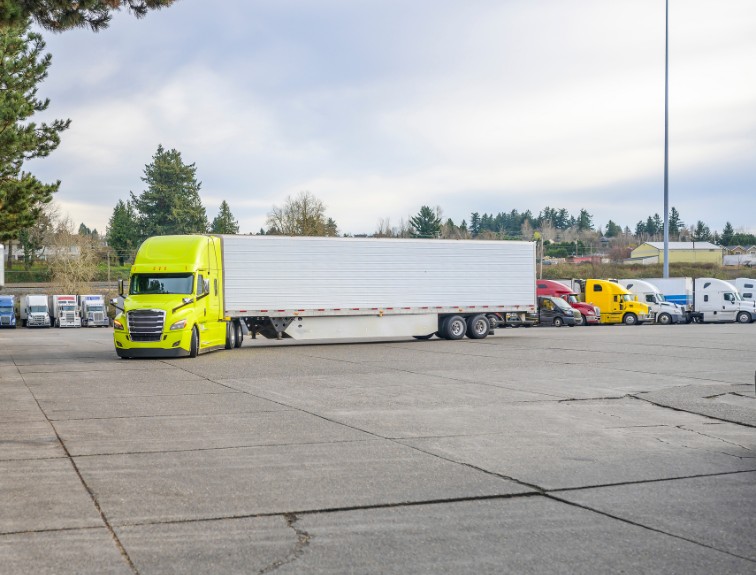
Since the 14-hour clock started back at the pre-trip inspection, it’s now closing in on the day’s driving. The exact cutoff shifts with whatever time a driver starts, but the rule stays the same: all driving wraps up 14 hours after that first on-duty task. That’s why experienced drivers start scouting for parking well before dark, rather than waiting until the last hour. A spot found too late, or too close to the cutoff, can be hard to find. OTR drivers park at rest areas, truck stops, company facilities, or customer lots (if allowed), and new drivers pick up that habit soon enough.

8:00 p.m. Onward: Post-Trip Inspection and Evening Routine
Once the truck is parked for the night, driving is done for the day, but a bit of on-duty work remains. A post-trip inspection covers the same components checked that morning. Then comes the evening routine: truck stop showers, a meal, and sleep, all logged as off-duty or sleeper berth time ahead of the next 10-hour reset.
The day runs on one set of federal rules, and staying ahead of them becomes second nature within the first few weeks on the road.
What New Drivers Learn in Their First Weeks
New graduates most often tell Apex’s career services team that time management at facilities was their biggest adjustment during their first months on the road. Most new drivers pick up the same three habits covered above: managing detention time within the 14-hour window, planning ahead for parking, and building a consistent pre-trip routine. Each one gets easier within the first few weeks.
Setting accurate expectations starts before graduation. Apex’s admissions team walks prospective students through common questions, such as “Will I make $80K my first year?” and “Can I be home every night with OTR?” That way, students start the program with a clear, honest picture of the job.
Succeeding in this job takes more than adjusting a few habits. Living on the road for weeks at a time changes daily life in ways that go well beyond driving, and new drivers adapt quickly with the right preparation.
How Apex Prepares Graduates for Life on the Road
Choosing a training program with post-graduation career support matters. Apex Technical Institute provides career services support from enrollment through a graduate’s first year on the job. That kind of support fills the gap between finishing CDL training and feeling confident behind the wheel. Parking, time management, or a shipper interaction can start to feel overwhelming, and having someone to call helps a new driver work through it faster.
Apex Technical Institute’s Class A CDL program runs four weeks, and what happens after graduation comes down to whether the job fits a driver’s goals and lifestyle. Apex’s career services team walks through that same question with every graduate before they ever sign on with a carrier.
FAQs
What does the 7/3 rule mean in trucking?
The 7/3 rule lets a driver split the required 10-hour break into two parts: at least 7 consecutive hours in the sleeper berth, plus a second break of at least 2 to 3 hours off duty or in the sleeper berth. It adds flexibility around delays and parking, not extra hours to the day.
Are there any exceptions to the 14-hour on-duty rule?
Yes. The adverse driving conditions exception lets a driver extend both the 11-hour driving limit and the 14-hour on-duty window by up to two hours if unexpected weather or road conditions slow things down. It only covers conditions the driver couldn’t have known about before the trip started, not routine traffic or planned construction.
Do new CDL graduates drive solo right away?
Not usually. Many carriers pair new graduates with an experienced trainer for a paid finish-training period, often three to eight weeks, before clearing them to run solo. That stretch adds hands-on miles and loads on top of what CDL training covers.
Is detention pay automatic, or does a driver have to request it?
It’s not automatic. A driver typically has to log arrival and departure times, get a signed confirmation from the shipper or receiver, and submit that documentation to the carrier to actually get paid for the wait.