How Much Do Class A Truck Drivers Make?
Truck Driver Pay at a Glance
Last updated: October 2026. Figures from the U.S. Bureau of Labor Statistics (May 2025) and the American Trucking Associations (2023 data).
Heavy and tractor-trailer truck drivers earned a median of $58,640 a year in May 2025, according to the U.S. Bureau of Labor Statistics (BLS). Most of these jobs require a Class A CDL. The sections below explain what new drivers earn in their first year, what factors affect pay, and how Kansas drivers compare to drivers nationwide.
Key Takeaways
- National median: $58,640 a year in May 2025, with an average of $59,710 (BLS).
- Kansas pay: $58,920 a year, about $280 above the national median. Drivers in the Kansas City metro area averaged $61,850, about $2,140 above the national average (BLS).
- Pay methods: Most long-haul and regional drivers are paid by the mile, while local drivers are often paid by the hour. Extra pay for waiting time, layovers, and stops can add to a check.
- First year: New drivers usually start below these figures and often begin on OTR or regional routes. Pay tends to rise with experience and a clean safety record.
How Much Do Truck Drivers Make a Year?
Nearly 2.1 million people worked as heavy and tractor-trailer truck drivers in May 2025. Here is how their pay was spread out:
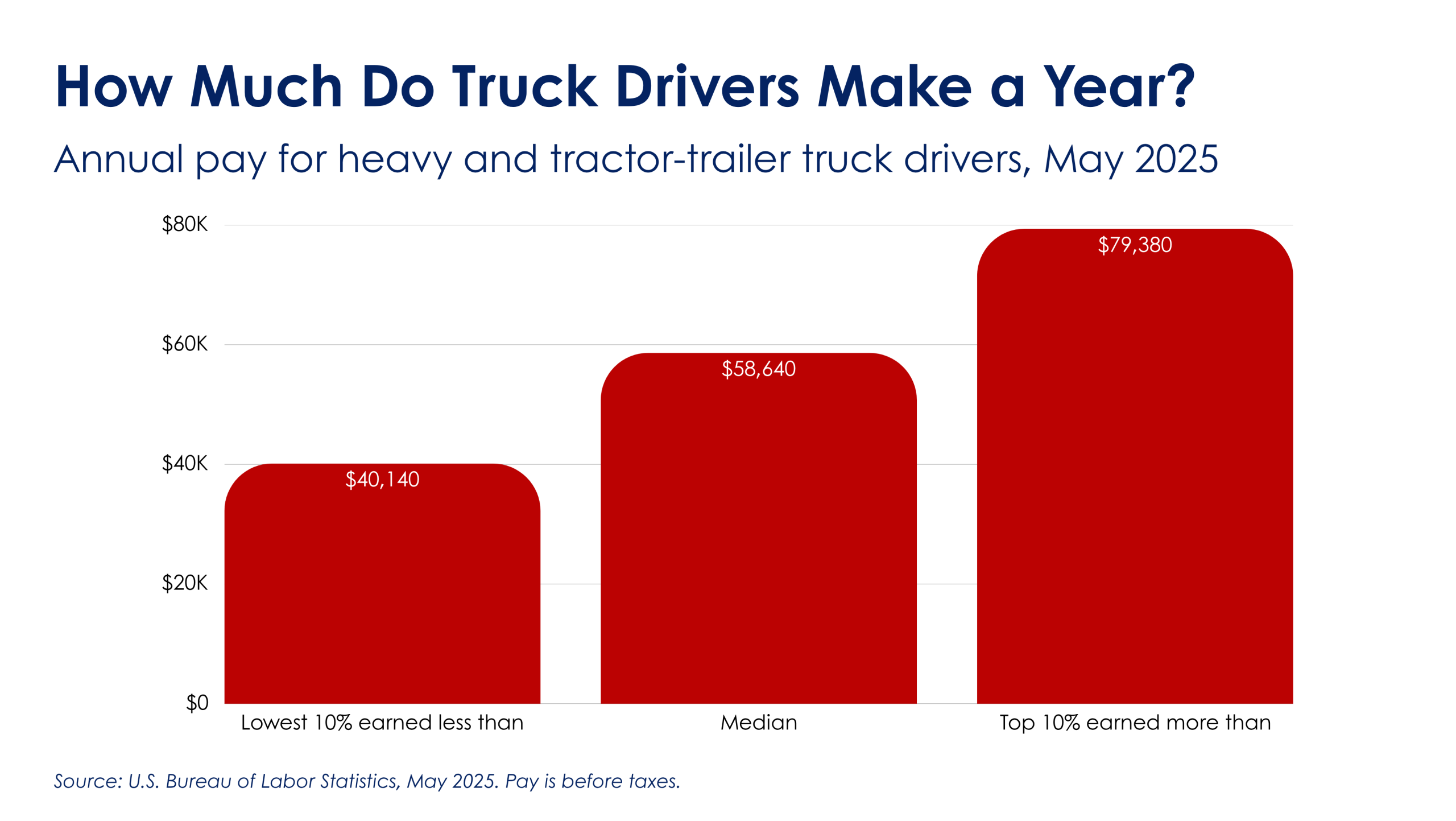
The median was $58,640 a year. The lowest-paid 10% earned less than $40,140, and the top 10% earned more than $79,380.
These figures are before taxes and do not include self-employed owner-operators. The BLS group also includes some Class B drivers, but it is the closest federal figure for Class A pay.
How Are Truck Drivers Paid: By the Mile, Hour, or Load?
Most long-haul and regional drivers are paid by the mile, a rate called cents per mile (CPM). For example, a driver paid 55 cents per mile for 2,200 miles would earn $1,210 that week before taxes, though rates vary by carrier. A high rate pays less if loads are few, so drivers comparing offers should ask about average weekly miles and how the carrier counts miles.
Other common pay methods include:
- Hourly pay, common for local jobs with several stops a day.
- Weekly or guaranteed pay, common on dedicated routes for one customer.
- Percentage of the load, common for owner-operators.
Many carriers also pay extra for waiting time (detention pay), layovers, and extra stops. Sign-on bonuses vary by carrier, too.
Do OTR, Regional, and Local Drivers Earn Different Pay?
Yes. Route type affects both how drivers are paid and how often they get home.
| Route type | Typical time away | Common pay method |
| Over-the-road (OTR) | 1 to 3 weeks at a time | By the mile |
| Regional | Home weekly or more often | By the mile |
| Local | Home every night | By the hour |
For a closer look at each type of job, see Career Paths for Truck Drivers.
Pay also depends on the type of carrier. Truckload carriers haul one customer’s freight per trailer, less-than-truckload (LTL) carriers combine smaller shipments from many customers, and private fleets move a company’s own products. The American Trucking Associations (ATA) surveyed 120 fleets about 2023 driver pay for its 2024 Driver Compensation Study. It reported these median yearly earnings:
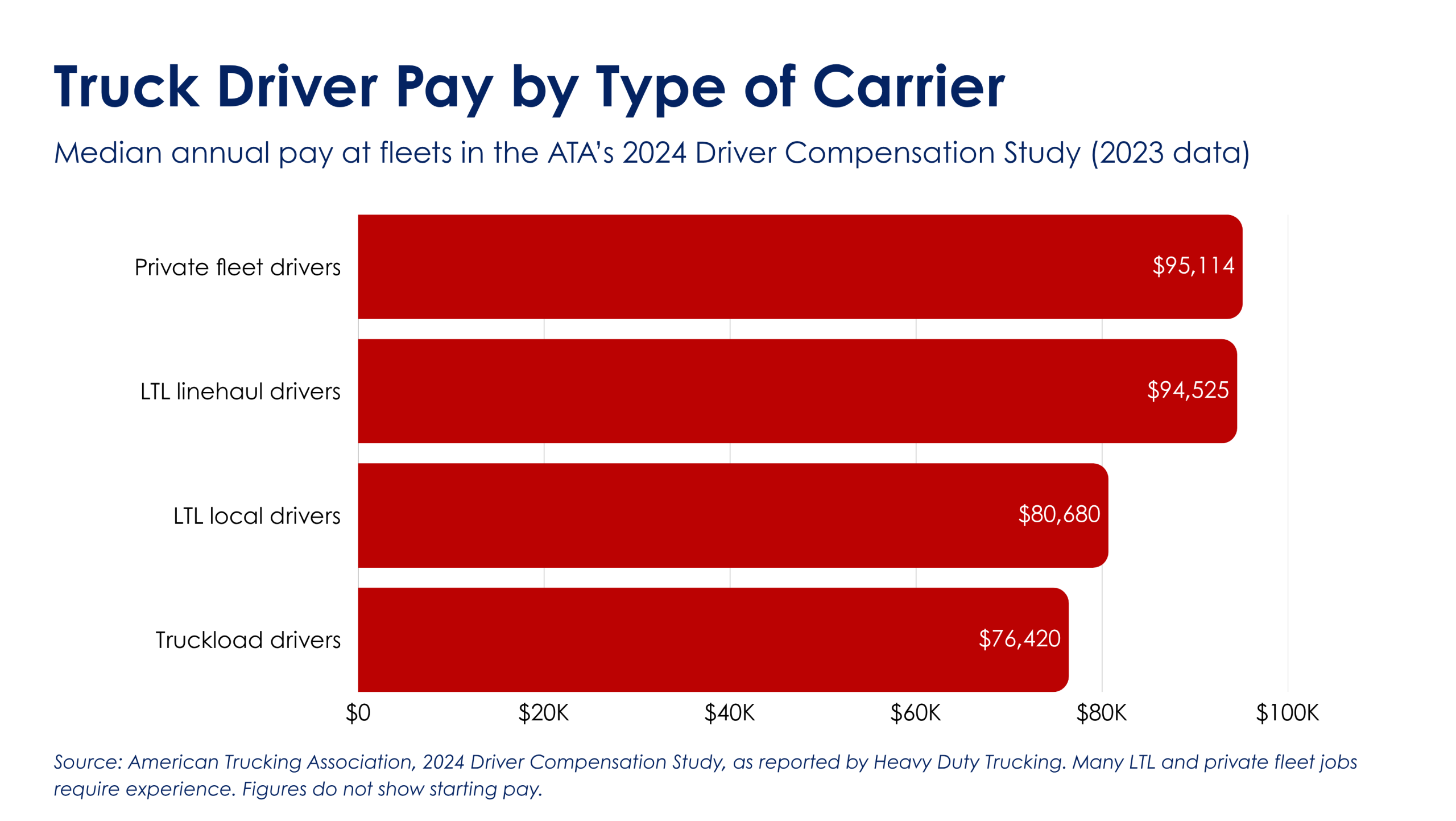
Private fleet drivers earned a median of $95,114, LTL linehaul drivers earned $94,525, LTL local drivers earned $80,680, and truckload drivers earned $76,420.
These figures are higher than BLS figures partly because only fleets that chose to take part were counted. Many LTL and private fleet jobs also require experience. They do not show starting pay for new CDL holders.
How Much Do New Class A Drivers Make?
New drivers typically start below the figures above, and pay grows as they gain experience. Many carriers pair new drivers with a driver trainer for the first few weeks, giving them time on the road with support. Most then move to OTR or regional routes, which build the experience that local and LTL jobs often look for.
A first job offer is about more than the rate. Weekly miles, home time, and benefits all matter. The CDL job placement page lists carriers that hire Apex graduates.
What Affects a Class A Driver’s Pay?
A driver’s experience and safety record have some of the biggest effects on pay. Many carriers raise pay rates as drivers log more time on the road, and some offer safety bonuses to drivers who avoid accidents and violations.
The type of freight a driver hauls matters too. Some carriers pay more for flatbed, refrigerated, tanker, or hazmat loads because these jobs can take extra skill or physical work. Flatbed drivers, for example, secure their own loads with chains, straps, and tarps.
Finally, location can change a paycheck, since pay rates differ from one state and city to the next.
How Much Do Truck Drivers Make in Kansas?
Truck driver pay in Kansas and the Kansas City area is above the national level, according to BLS data from May 2025.
| Area (BLS, May 2025) | Annual pay | Compared to U.S. | Drivers |
| United States | $58,640 median, $59,710 average | Baseline | About 2.1 million |
| Kansas | $58,920 median | $280 above U.S. median | 24,220 |
| Kansas City metro | $61,850 average | $2,140 above U.S. average | 18,230 |
The Kansas City metro area sits where I-70, I-35, I-29, and I-49 meet, so drivers can choose from local, regional, and OTR jobs. For more on a move into trucking, see Why Become a Truck Driver?
How Do New Truck Drivers Get Started in Kansas City?
The first step is earning a Class A CDL. Apex Technical Institute in Kansas City, Kansas, offers a Class A CDL Training program that students can complete in as little as four weeks. The program meets federal Entry-Level Driver Training (ELDT) requirements, and Apex is a Kansas certified third-party CDL testing site. Apex also partners with hiring carriers such as Werner, Sygma, DOT Foods, McLane, Estes, Saia, and XPO, and some students receive job offers before they graduate. From there, Apex’s career services team helps each graduate compare offers and choose the job that best fits their goals.
To get started, call Apex at (913) 444-5664 or request information about the Class A CDL program.
Frequently Asked Questions
Do new drivers get paid while training with a carrier?
Yes. Carriers typically pay new drivers while they train with a driver trainer, and pay usually goes up once drivers start running solo.
Is detention pay guaranteed?
It depends on the carrier. Many carriers pay detention once waiting time passes a set limit, so it helps to ask about the policy before accepting a job.
What benefits do truck drivers get?
Many company drivers are offered health insurance, paid time off, and a retirement plan. Comparing the full benefits package along with the pay rate helps drivers find the best overall offer.
How soon does a new driver’s pay go up?
Many carriers raise pay at set points, such as after 6 months or 1 year of safe driving. Getting the pay scale in writing helps drivers know what to expect.
Do owner-operators make more than company drivers?
They can earn more per mile and have more control over the loads they take. They also cover the truck, fuel, insurance, and repairs, so income after costs varies.
More answers are on the Apex FAQ page.